
Many people don’t sleep well. And now there is a booming class of companies that say you can drink your way to better sleep.
Not booze—alcohol actually messes up your shut-eye. The new breed of nightcaps generally combines minerals, vitamins and herbs, offered in flavors such as hot cocoa, mixed berry and vanilla latte.
Sales are surging for brands such as Som Sleep and Dream Water, boosted by social-media trends including “sleepmaxxing”—optimizing your Zs—and the “sleepy girl mocktail.” Devices like the Apple Watch, Oura Ring, and Whoop have growing numbers of consumers tracking their sleep, and searching for ways to improve it.
Jeana Anderson Cohen, 40, is a sleep-drink veteran. She has ordered Som Sleep in bulk, used Natural Vitality’s Calm drink mix and has tried MoonBrew.
“You just sort of feel like you’re able to relax into sleep,” said Anderson Cohen, who runs an online fitness community and co-owns a hotel and event space in New Buffalo, Mich. “I just function so much better if I am well-rested the next day.”
About 22% of U.S. adults said they drink beverages that claim to help with sleep, according to 2024 data from market-research firm Mintel. That is up from about 16% in 2023.
Sales of sleep supplements, which include powdered drink mixes generally added to milk or water, have totaled about $1 billion so far in 2025, up 6.4% from a year earlier, according to market-research firm SPINS. Ready-to-drink liquid sleep-drink sales reached $2.71 million, up from $1.8 million.
Catching Zs
The sleep-deprived are a big potential market. About 37% of American adults get less than the recommended amount of at least seven hours of sleep a night, according to federal data. And about 57% said they would feel better if they got more sleep, according to a December 2023 Gallup poll of more than 1,000 U.S. adults.
Som Sleep has seen sales double in 2025 from a year earlier, while sales at MoonBrew have grown more than 150%, the companies said.
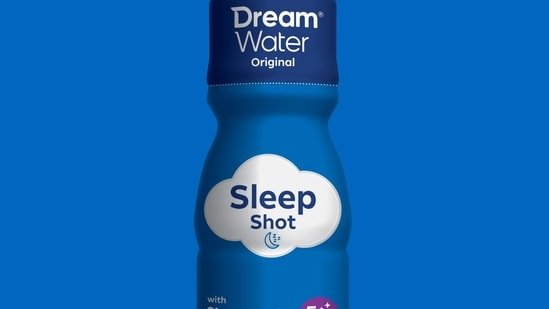
At Delivra Health Brands, sales of its Dream Water products were up 34% in the 12 months ended June 30. The company’s shot-size drinks come in flavors such as “snoozeberry” and are ubiquitous in airport kiosks across North America. Some U.S.-based Hilton and Choice Hotels in Canada have started carrying them.
MoonBrew, which launched its sleep drinks in 2022, sells powdered mixes for $48 a container, or less for monthly subscriptions. The actress Kristen Bell and singer Suzanne Vega have shouted out MoonBrew in recent interviews. (The company said the celebrities weren’t paid and didn’t get free product.)
MoonBrew co-founder and CEO Allan Shen said the beverages are also meant to be a tasty treat that people look forward to before bed, with the preparation adding a ritual element. Hot cocoa is the most popular of MoonBrew’s seven flavors. The mixes contain magnesium, the amino acid L-theanine and other ingredients.
“People are saying ‘I know I only got 30 minutes of deep sleep and an hour of REM. Help!’ ” said Kat Cole, chief executive of AG1. In August, the company behind the popular green powder supplement started widely selling AGZ, its new product for sleep.
AGZ contains the herb ashwagandha along with magnesium, the spice saffron and more than a dozen other ingredients. A 30-night supply costs $99, or $79 if bought as a recurring subscription.
Getting the taste right has been a challenge, said Cole. AGZ comes in chocolate, chocolate mint, and mixed berry flavors. “You taste the earth,” she said. “It’s not chocolate milk.”
The drinks compete against a host of other sleep aids, including prescription and over-the-counter sleep medications, cannabis and CBD gummies, as well as more-traditional supplements in tablet and capsule form.
What sleep experts think
Evidence for many of the ingredients in sleep drinks is mixed, said Jennifer L. Martin, a sleep specialist at Florida International University’s College of Medicine. Some studies of magnesium, for example, find it beneficial for sleep, while others show no effect.
Taking L-theanine does improve people’s perception of the quality of their sleep and how long it takes to nod off, according to a review of research published this year in the journal Sleep Medicine Reviews. Ashwagandha is linked to improved sleep, according to a review published in 2021 in the journal PLOS One.
Vitamin B6, which is in AGZ, and zinc, which is in AGZ and MoonBrew, could be helpful for falling asleep and staying asleep, said Marie-Pierre St-Onge, a professor of nutritional medicine at Columbia University Irving Medical Center. The nutrients are involved in converting tryptophan into the sleep-promoting hormone melatonin, she said.
Melatonin, an ingredient in some sleep-aid drinks, isn’t meant to treat conditions such as insomnia, said Dr. Seema Khosla, the medical director at the North Dakota Center for Sleep. It is more appropriate for jet lag and short-term use, said St-Onge.
And Melatonin has drawn scrutiny after a recent study linked it to heart failure. Some drinks, including AGZ and MoonBrew, bill themselves as melatonin-free.
The placebo effect might also be at work.
“People believe that these things will help them and that, in and of itself, helps people feel more relaxed and able to fall asleep,” Martin said. Meditation, reading a book or sipping herbal tea “are a lot less expensive and probably equally effective.”
Supplements can interact with prescription medication, so Martin advises people to check with their doctor before using them. Side effects are also possible. Magnesium supplements can upset the digestive system, Martin said, and higher doses (5 or 10 milligrams, for example) of melatonin can cause grogginess in the morning.
There is one particular downside to downing drinks close to bedtime: You might have to get up to use the bathroom.
Write to Andrea Petersen at andrea.petersen@wsj.com and Laura Cooper at laura.cooper@wsj.com