
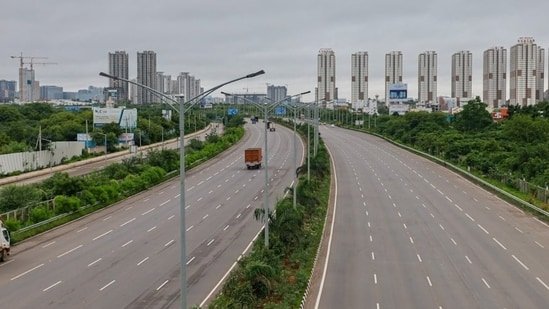

Housing sales across major Indian cities remain strong, supported by steady demand, favourable interest rates, and rising incomes. Over the past 15 years, housing affordability has improved across most Tier I cities, aided by higher incomes, moderate price growth, and better credit access. According to Colliers India, the Price-to-Income (P/I) ratio has improved from 88.5 in 2010 to 45.3 in 2025.

Cities like Ahmedabad and Hyderabad have emerged as some of the most affordable residential markets in the country. In Ahmedabad, the Price-to-Income (P/I) ratio improved from 43.6 in 2010 to 19.8 in 2025, while in Hyderabad it improved from 25.6 to 16.3 over the same period. Bengaluru also saw its P/I ratio improve from 44.2 in 2010 to 20.9 in 2025, and Delhi-NCR from 63.8 to 27.8. This trend reflects consistently strong income growth, which has helped offset the impact of rising housing prices and keep affordability relatively high, the report noted.
Average housing prices are calculated basis the composite carpet prices for 50 cities in India and assumed for a 1,000 sq ft unit. The average income is per-capita disposable income per annum.
While raw material cost pressures continue to push prices up, income growth has outpaced property price increases in most markets. Since 2010, average incomes in India have risen more than fourfold, growing at a CAGR of around 10% versus 5–7% for housing prices. Most Tier I cities in India have witnessed a significant improvement in housing affordability over the past 15 years, driven by rising income levels, moderate growth in property prices and expanding access to credit, said the report by Colliers India.
As a result, the Price-to-Income (P/I) ratio has improved from 88.5 in 2010 to 45.3 in 2025, indicating a sharp rise in affordability, a report by Colliers India has said.
Regulatory reforms and conducive monetary policy have helped in improving overall housing affordability and sustaining demand across the Tier I markets. For instance, interest rates were at a historic low in the aftermath of the pandemic, supporting growth across industries and economic segments, including residential real estate. Post the cycle of increasing repo rates in the post-pandemic era, which was driven by high inflation levels and external volatilities, the benchmark lending rate has now dropped to 5.5%, it noted.
Alongside improving housing affordability levels in the past decade, the overall credit exposure of scheduled commercial banks to the residential segment has steadily increased. This indirectly reflects sustained housing demand and strong lender confidence. Outstanding home loans have increased over 10X times in the last 15 years, from ₹3 lakh crore in 2010 to more than ₹30 lakh crore in 2025. More importantly, the share of housing loans in the overall bank credit has increased from nearly 10% in 2010 to about 17% currently, the report noted.
Infrastructure development has also been expanding residential catchment areas across central, suburban and peripheral locations in these cities. Moreover, as offices continue to adopt decentralized work models and move away from their dominant Central Business District (CBD) presence, housing demand has also been shifting to well-connected localities in proximity to workspaces.
The price arbitrage as of date is less pronounced in the case of cities like Ahmedabad, Bengaluru and Hyderabad, where urban growth is more balanced. Interestingly, even though housing prices in fringe localities of cities such as Delhi NCR, Mumbai and Chennai have risen significantly in the last 10-15 years amidst connectivity enhancements, the price differential between the central and peripheral locations remains significant, it said.
“While concerns over rising raw material costs continue to loom, pushing the prices upward, average income levels have increased at a higher rate compared to the average rise in property prices across most major markets. Looking ahead, steady growth in income levels coupled with likely softening of interest rates amidst low inflation, will continue to boost average housing affordability levels and support the residential market across major cities in the near-term.,” said Badal Yagnik, Chief Executive Officer and Managing Director, Colliers India.
Future outlook
Looking ahead, steady income growth, combined with the prospect of softer interest rates and low inflation, is expected to further strengthen housing affordability and support residential demand in the near term, the report noted.